From Strategic Plan to Donor Communication
Penn Libraries had a fresh, new strategic plan they were proud of—a vision set forth by the Libraries’ new vice provost that responded directly to the University’s strategic framework. It was time to start raising money. But they weren’t ready for a campaign.
They asked us for help. Our challenge was to craft a clear, concise, and persuasive new communication that directly connected the strategic plan to funding priorities. It had to inform and inspire both internal stakeholders and donors at the highest levels.
We took a three-phase approach to our process:
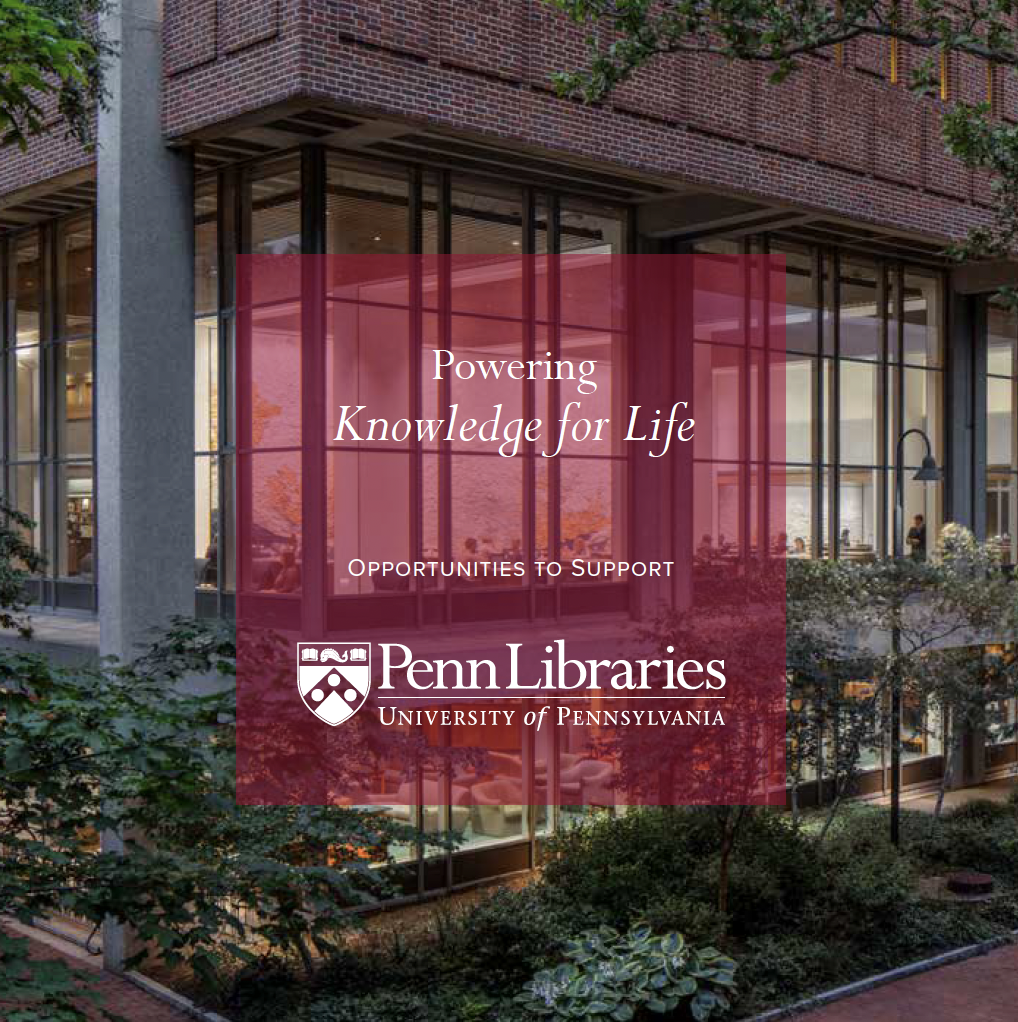
Front cover
1. Discovery
First, we engaged in deep learning, which included:
Touring the main library (one of 19) at Penn to get a sense of place and the activities within.
Reading current fundraising materials and other communications to understand what donors were used to seeing. This also helped us learn the institutional voice and tone.
Interviewing select staff and board members to hear firsthand how they understood the strategic plan and its goals, while gleaning more details about implementation.

Inside panel with two of the strategic plan goals
2. Messaging
We began to turn what we learned during Discovery into core messages—around 150 words per theme.
We then refined those messages with the vice provost, ensuring that we captured the right balance between her voice and the University’s.
Finally, we tested the messaging with the Penn Libraries board by facilitating an interactive review of the draft messages at a regularly scheduled meeting.
Board members broke into groups to discuss what they perceived as the strengths and weaknesses of the messaging, and then shared their conversations with the full group for further discussion.
3. Implementation
Finally, it was time to put all the pieces together. We polished the core messages, wove a meaningful metaphor through the narrative and design, featured the voice of the vice provost, and had a strong call to action.
It wasn’t a detailed case for support, and it needed to be relatively short, so the graphic design and photography needed to do some heavy lifting to support the story we wanted to tell.
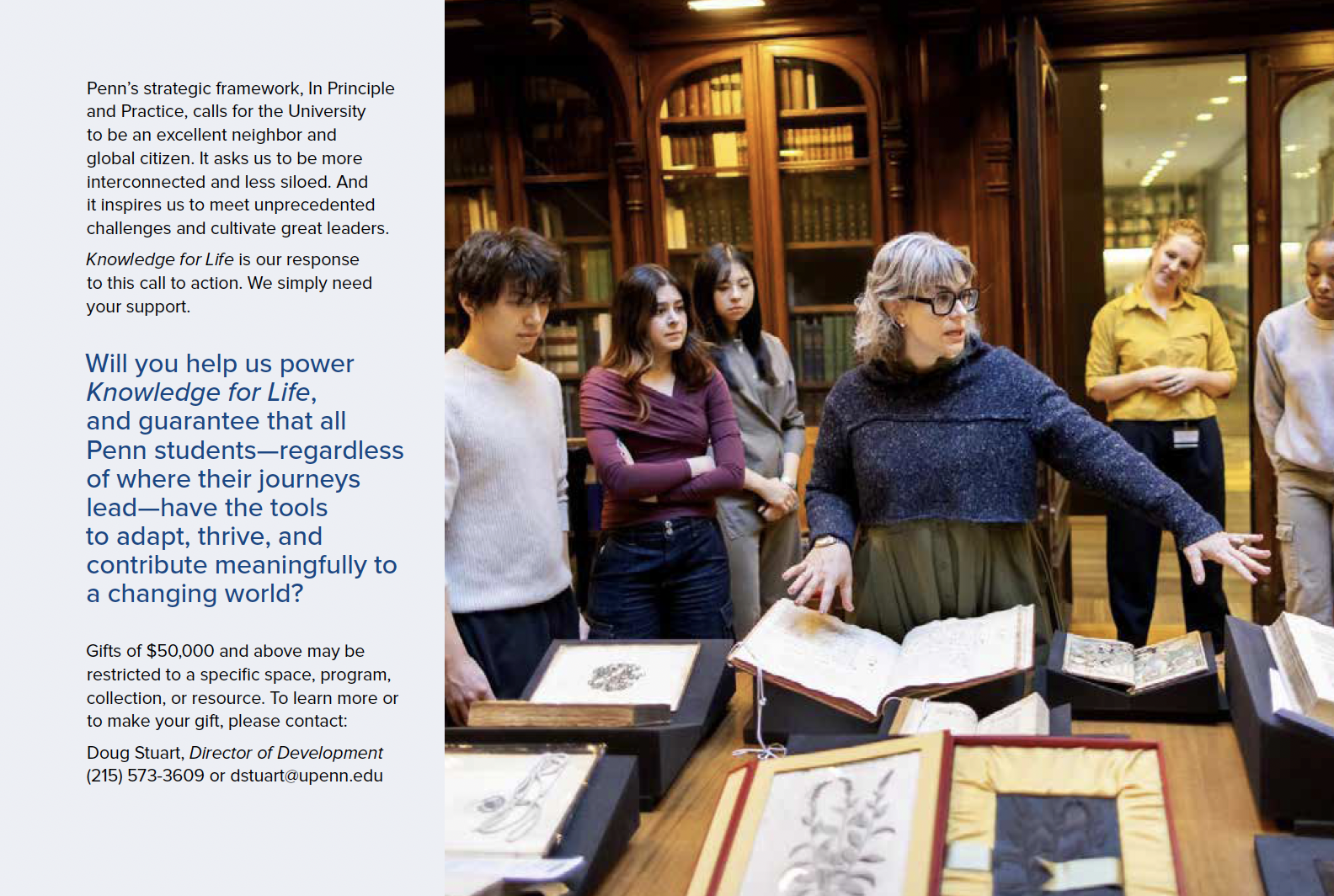
Call to action
Benefits + Outcomes
The finished product has successfully set up Penn Libraries for success in several ways:
The most senior leader feels a sense of tremendous pride seeing their vision elevated through a sophisticated and beautiful print piece.
The board is more deeply engaged both as prospective donors and as advocates who can speak confidently and persuasively about the strategic plan and related funding priorities.
The development team has vetted, foundational language for other fundraising and stewardship communications.
Non-development colleagues across the University, particularly in marketing/communications, also have access to that language.